

Class Q is a popular permitted development right in the UK, and for a good reason. Converting agricultural buildings into residential dwellings can deliver huge uplifts in land value.
But success isn’t automatic; you still need to be ready for the prior approval process. Many schemes still get refused. Class Q sits within a tight legal framework under the General Permitted Development Order (GPDO), and recent amendments have clarified how the criteria are applied in practice.
In this guide, we break down what Class Q allows, the key tests LPAs apply, how the prior approval process works, and how to choose sites with the best chance of success.
Key Highlights
- Class Q is a permitted development route for converting existing agricultural buildings to homes, but it only works when the proposal stays within strict GPDO rules.
- Class Q is only for conversion, not rebuilding. If your scheme effectively replaces the building or creates a new dwelling, Class Q is likely to fail.
- Eligibility hinges on agricultural use history and evidence, including proving the building was part of an established agricultural unit for at least 10 years.
- Since May 2024, Class Q is more flexible, allowing up to 10 homes and 1,000 sqm, plus limited extensions. But full planning is often better when you’re outside those limits or the case is borderline.
- Strong evidence is essential for prior approval. LPAs assess access and transport, flood risk and contamination, noise, and design, so each area needs clear supporting documentation.
What Class Q Allows (And What It Doesn't)
Class Q is a permitted development right that allows agricultural buildings to be converted into residential dwellings. This can be done without a full planning application, provided the proposal stays within the rules.
Importantly, this is about conversion, not starting again. Class Q allows building operations that are reasonably necessary to make the structure work as a home, like structural repairs, new openings, insulation, and services.
What it doesn’t allow is demolition and rebuild, even if you’re replacing the building with something that looks very similar. If the existing building isn’t capable of conversion, Class Q isn’t the right route.
In May 2024, changes were made to Class Q to make it more flexible. Developers can now convert agricultural buildings into up to 10 homes of a maximum of 1,000 square metres in total. Also, there’s now more flexibility for minor extensions, with Class Q allowing a four metre rear extension of agricultural buildings.
These are tightly controlled development rights. How successful your proposed scheme will be depends less on what’s allowed and more on how the local planning authority interprets whether what you’re proposing is genuinely a conversion rather than a rebuild.
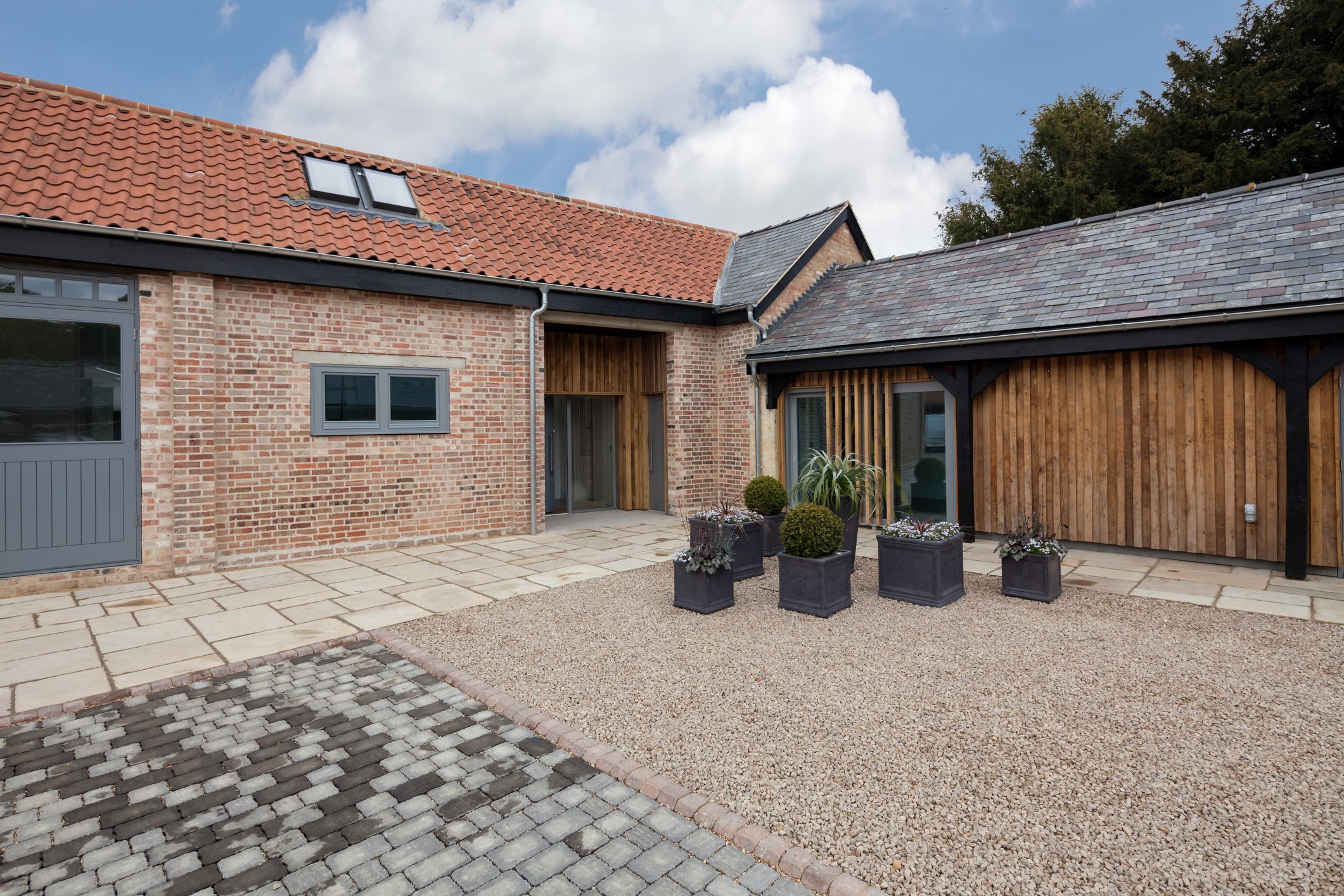
Key Tests LPAs Apply When Assessing Class Q
Before any Class Q scheme gets the green light, the LPA runs it through a set of specific tests. These are focused checks that look at whether the proposal fits within Class Q and whether the impacts are acceptable. We’ll discuss the main ones below.
Agricultural Use and Established Units
This test is about proving the building genuinely forms part of an established agricultural unit, rather than something that’s been sitting idle for years with a loose farming backstory. The building must have been used only for agriculture for a minimum of 10 years. .
LPAs will look at historic use, planning records, and whether the wider agricultural unit was functioning as a farm at the qualifying date.
Where schemes fall down is when the evidence is vague or inconsistent. A single reference to storage or an informal grazing arrangement, such as seasonal livestock grazing under a short-term agreement, rarely cuts it.
To strengthen a case, developers should pull together a clear timeline showing agricultural activity, supported by tenancy agreements, business records, or previous applications tied to the agricultural land.
It’s also important to show how the building relates to the wider farmstead. Is it logically positioned within the holding, or does it feel isolated? LPAs want to see that the building clearly forms part of a coherent farm operation, rather than a standalone structure.
Doing this work upfront doesn’t guarantee approval, but it removes one of the most common reasons schemes stall early in the prior approval process.
Conversion Vs Rebuilding
This is often the make-or-break issue. LPAs are focused on whether a proposal is a genuine conversion or a rebuild trying to look like a Class Q scheme.
The starting point is the structural integrity of the existing buildings. If large sections need replacing, or the proposal relies on removing most of the buildings, this sets off alarm bells.
Developers need to show that the building is capable of conversion in its current form. Structural surveys matter here, but so does the design approach.
Retaining walls, rooflines, and openings go a long way in demonstrating Class Q requirements. Appeals consistently show that like-for-like replacement isn’t enough if the end result effectively creates a new building.
This is where Class Q differs sharply from more ambitious schemes, like barn-to-hotel conversions, which almost always sit outside the scope of Class Q and require full planning.
Whether the Location is Impractical or Undesirable for Conversion
Location is less about policy designations and more about practicality. LPAs will ask whether it actually makes sense to turn this building into a home, given where it sits and how it functions day to day.
That includes proximity to services, relationship to neighbouring towns, and whether future occupiers would face unreasonable constraints.
Access is a big part of this. Demonstrating existing suitable access is often essential, especially where tracks cross third-party land or aren’t designed for residential use. If emergency vehicles or refuse collection can’t reasonably reach the site, this could raise concerns.
Context also matters: buildings surrounded by active farming operations may raise questions around noise, odour, and safety. That doesn’t rule them out automatically, but develope
Contamination and Flood Risk
As part of your prior approval application, LPAs will assess whether past uses of the building could have left contamination behind, or whether flood risk makes residential use unsafe. Agricultural storage, fuel tanks, and workshops may raise flags with LPAs.
A contamination assessment is often enough to identify whether further investigation is needed. Where flood zones are involved, clear mitigation measures, site-specific flood risk assessments, and realistic layouts are essential.
It helps to demonstrate that these risks are understood and manageable within the scope of permitted development, rather than something that would require broader planning balance to resolve.
Transporting / Highway and Noise Impacts of the Development
LPAs will look at how many vehicle movements the conversion is likely to generate, whether access visibility is safe, and whether day-to-day residential traffic would be different from the building’s former agricultural use. If traffic levels are broadly similar or lower, that’s usually a strong starting point.
Noise is another important factor. As we mentioned above, proximity to working farms, plants, or nearby roads can raise questions about future complaints and land-use conflict. A simple noise assessment can go a long way in showing that residential occupation is realistic.
Design and External Appearance of the Building
Design under Class Q isn’t about architectural flair. LPAs are looking for conversions that respect the original character and proportions of the building.
Using appropriate materials and keeping things like new windows and doors simple and consistent within the existing structure helps demonstrate that the scheme is a genuine conversion, not a total rebuild.
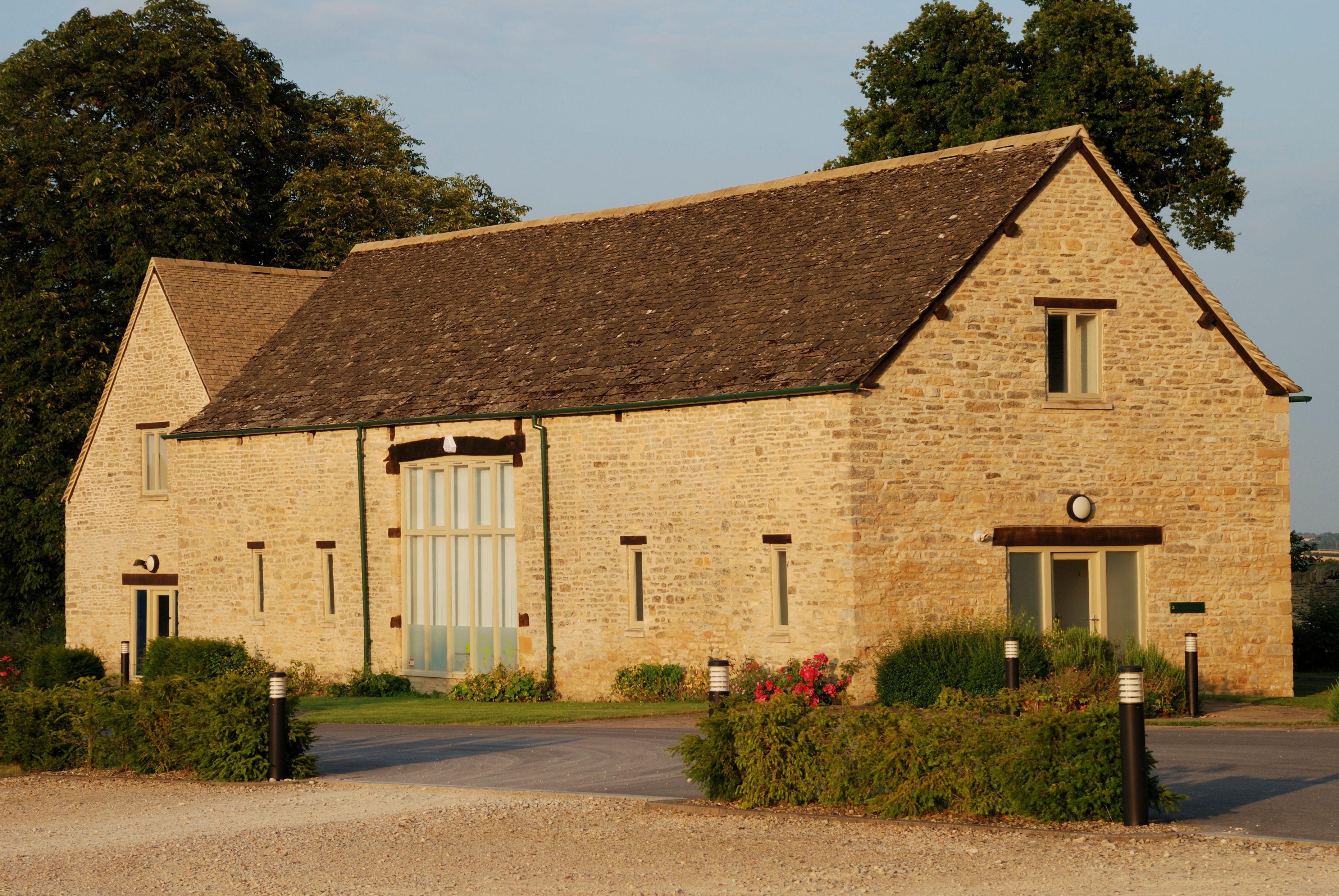
What Does the Class Q Permitted Development Process Look Like?
The outcome of the Class Q planning permission process usually depends on how well you do the groundwork before submitting your application to the LPA.
Step 1: Check eligibility
The first step is checking eligibility. This is where property sourcing and assessment tools can help.
LandInsight, for example, enables you to quickly assess planning history, constraints, designations, access, flood risk, and surrounding context. This helps you decide early on whether a site is worth progressing or whether full planning is the smarter option.
Step 2: Submit a prior notification application
Once you’re confident that the site is a good opportunity, the formal process starts with prior notification. This isn’t a full planning application, but it does trigger a technical review against the defined set of matters mentioned above.
Step 3: Gather your supporting evidence
Getting the scope and supporting information right here is critical because there’s a limited opportunity to reshape a weak submission later.
Structural reports, transport notes, flood data, and clear drawings all help keep the assessment objective.
After submission, the LPA assesses the proposal against the Class Q tests outlined above. This is typically handled by planning officers rather than a committee, and the focus stays firmly on the evidence submitted.
Step 4: Complete the conversion within established timeframes
After you submit a valid prior approval application, the LPA has 56 days to notify you whether prior approval is granted or refused. If you don’t receive a decision within 56 days, you can usually treat this as approval and proceed, as long as your application was valid and you provided all required information.
Class Q requires the conversion to be completed within three years of the prior approval date. Permitted Development is different to a planning permission in this regard. With planning permission, you must have commenced before the time expires. With PDR you have to have finished.
When is Full Planning Permission a Better Route Than Class Q Conversion?
Class Q can be a high-impact development tool, but it’s not always the right one. In some cases, pushing a marginal scheme through Class Q creates more risk than doing a full planning application from day one.
The clearest trigger is where a proposal fails one or more of the core Class Q tests:
- A building with questionable structural integrity
- A location that raises obvious sustainability or access concerns
- Designations that make residential use hard to justify
If too much of a scheme relies on how LPAs will interpret your proposal, it could quickly fall apart.
If the proposal only works on a borderline reading of the rules, for example, whether the works still count as a conversion, or whether access and sustainability impacts are acceptable, the route becomes less reliable.
Full planning also starts to make more sense when the end goal goes beyond what Class Q allows. If you’re aiming for larger homes, a different siting, or a higher number of units than the thresholds support, forcing the proposal into Class Q can mean compromising the outcome.
Similarly, where there is an opportunity to rethink an entire farmstead layout, Class Q often proves too restrictive to unlock the site’s real potential.
The trade-off comes down to flexibility versus scope of assessment. This comparison helps clarify when each route is likely to be more successful:
|
Factor |
Class Q prior approval |
Full planning permission |
|
Grounds for refusal |
Narrow and defined |
Broader and policy-led |
|
Flexibility |
Low. Must fit strict tests and limits |
High. Allows bespoke design and a wider range of solutions |
|
Evidence burden |
Technical evidence needs to be tight because there’s limited scope to reshape later |
Still evidence-led, but often more scope to resolve issues through design changes and negotiation |
|
Scale and layout |
Restricted by floorspace caps, dwelling limits, and what counts as a “conversion” |
Can support greater scale, relocation, and wider site re-planning |
|
Predictability |
High when clearly compliant, risky when borderline |
Variable, but can be more predictable where Class Q tests are hard to satisfy |
Here’s what this looks like in practice. Take a site where a barn sits poorly in relation to access and neighbouring uses. A Class Q route might hinge on marginal arguments and a finely balanced decision. A planning-led team may seek full permission and relocate the dwelling within the site and deliver a cleaner, low-risk scheme overall.
How LandInsight Supports the Class Q Conversion Process
LandInsight takes the guesswork out of Class Q development and makes the prior approval process more efficient. From initial site identification to deciding whether to pursue Class Q or full planning, it gives developers actionable insight every step of the way.
- Site scanning: Use LandInsight’s Ownership and Property datasets to quickly see who owns the land and whether it sits within an established agricultural unit. Then layer Opportunities and Constraints maps to check for planning designations, Article 4 restrictions, flood zones, and access issues so you can confirm basic eligibility before starting a prior approval application.
- Precedent review: LandInsight’s Planning Application layer allows you to pull up past Class Q permission and barn conversion decisions in the same LPA. Patterns in approvals and refusals become obvious, so you can anticipate objections and tailor applications to match what works locally.
Value comparison: Weigh the potential uplift from a Class Q scheme against a more ambitious full-planning project by assessing likely timescales, financial returns, and risk profiles side by side. This helps you decide whether permitted development is the right route or whether a full planning route makes more sense.
Find candidate sites, check constraints like flood and designations, and review local Class Q precedents to focus on the strongest opportunities first.

Find Class Q Land and Secure Approval Quicker With LandInsight
Class Q permitted development rights open up exciting opportunities for developers by allowing agricultural buildings to be converted into residential dwellings with fewer hurdles than a full planning route.
But as we’ve seen, success comes down to three things: how the LPA interprets Class Q, what constraints apply to the site, and whether prior approval is the right approach from the start.
LandInsight helps turn that complexity into clarity. Beyond mapping and scanning, it highlights sites with the strongest development potential, flags technical and policy constraints early, and lets you compare scenarios like converting an existing agricultural building under Class Q versus pursuing full planning permission.
The tool consolidates data on access, flood zones, designations, and past approvals, which supports better decision-making and reduces the risk of costly surprises later on.
LandInsight cuts research time and reduces uncertainty so you can confidently target the most reliable Class Q permitted development opportunities.
LandInsight helps you assess ownership and planning constraints upfront, so you can make better Class Q decisions earlier in the process.
FAQs About Class Q Planning
How easy is it to get Class Q planning?
Getting class Q permission isn’t automatic. Success depends on meeting the strict tests local planning authorities apply, including building condition, location, and access. Evidence like structural surveys, site history, and design proposals increases your chances.
What is the 10-year rule for class Q?
The 10-year rule for Class Q planning means that if an agricultural building became a part of an established agricultural unit after 24 July 2023, it must have been part of the unit for at least 10 years before it can be converted into residential dwellings under Class Q.
How long does Class Q planning last?
Class Q prior approval gives you three years from the date of prior approval to complete the conversion.
What is a Class Q betterment?
Class Q betterment is the improvement of a building that was originally developed under the Class Q permitted development rights, which fall under the Town and Country Planning (General Permitted Development) Order 2015. It’s a way to upgrade an agricultural dwelling, like a barn, into a Class Q home without requiring full planning permission.