

Brownfield land plays a starring role in development. Whether you build residential schemes, deliver essential energy infrastructure, or promote sites for later-life living, understanding how brownfield is defined and classified in UK geography and planning policy gives you an edge.
Not only is brownfield redevelopment encouraged in national policy, it's prioritised. Combine this with local authority housing targets, pressure to protect the green belt, and an ongoing need for sustainable growth, and you can see why brownfield is firmly in the spotlight.
In this article, we’ll break down the geographical definition of a brownfield site, how brownfield land is recorded and mapped, what it means for planning, and how developers can use LandInsight to surface opportunities faster.
Key Highlights
- A brownfield site is land that has been previously developed, typically featuring historic buildings or infrastructure.
- The NPPF excludes certain land types from this definition, including residential gardens, parks, allotments, and agricultural buildings.
- Brownfield land is prioritised in UK planning policy, making it a strategic choice for developers seeking smoother planning pathways.
- Brownfield Register data is essential for identifying sites local authorities consider suitable for housing-led redevelopment, though registers have data-quality limits.
- The strongest brownfield opportunities are often found off-market, through planning history, vacancy signals, and direct ownership approaches.
- Assessing a brownfield site means weighing contamination and remediation costs against infrastructure savings, alongside flood, heritage, and ecology constraints.
- LandInsight helps developers find, assess, and shortlist brownfield sites quickly, using layers like ownership, planning history, constraints, and the Brownfield Register.
What Is a Brownfield Site (In Geography)?
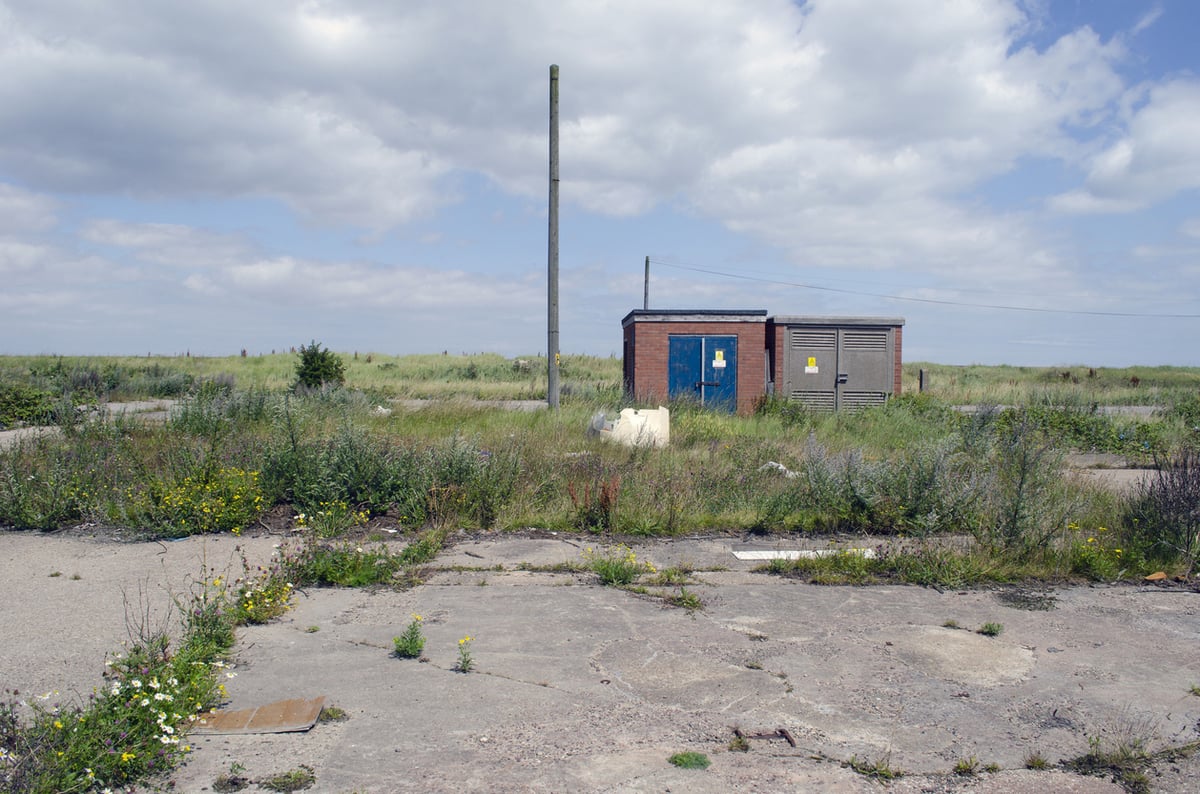
In geography, a brownfield site is land that has been previously developed. Typically, this means it has hosted a permanent structure or significant infrastructure at some point in its history. In planning terms, this definition aligns with the National Planning Policy Framework (NPPF), which defines brownfield land as “previously developed land”, with a few exceptions (gardens and recreational land, we’re looking at you).
What Counts as Previously Developed Land (and What Doesn't)
The NPPF is fairly specific about what falls outside the definition, even where a site has clearly seen human activity. The following are excluded from "previously developed land":
- Residential gardens, whatever their size or history of use
- Parks, recreation grounds, and allotments
- Land used for agricultural or forestry buildings
- Land restored following mineral working or waste disposal, where restoration conditions have been complied with
- Land where any remaining structures or fixed surface infrastructure have blended into the landscape over time
Getting this distinction right matters at the sourcing stage. A former paddock with a couple of stables on it might look brownfield on paper, but if it reads as agricultural land under the NPPF, you're assessing it as greenfield, not brownfield, and the planning calculus changes accordingly.
Brownfield land is usually found within built-up urban areas and often already benefits from surrounding transport connections, utilities, and community infrastructure. That makes it valuable in a country where demand for new homes is high, cities need densifying, and the Green Belt remains politically (and emotionally) untouchable.
Brownfield Site Characteristics
Here are the core traits that typically define brownfield land:
1. Previously developed or built-upon land. The defining feature: it has hosted significant development before.
2. May contain contamination or require remediation. Not always; some brownfield sites are immaculate, but developers should assume at least a desktop check is needed.
3. Usually located within existing urban areas. Meaning better access to amenities, communities, and local services.
4. Often benefits from existing transport and utilities infrastructure. A cost saver and a planning win.
5. Recorded on the local authority Brownfield Land Register. These registers are updated annually and highlight land deemed suitable for housing-led redevelopment.
6. May have prior planning history. A previous refusal or approval can influence redevelopment potential.
7. Can qualify for regeneration incentives. From Housing Infrastructure Fund support to targeted brownfield land release initiatives.
Benefits of Brownfield Development
Redeveloping previously used land has commercial and policy advantages - and developers who understand this can move faster and with more confidence.
Here are the major benefits:
- Supports sustainable urban regeneration. Revitalises underused land, strengthens communities, and aligns with sustainability goals. LandInsight helps here by surfacing suitable plots instantly via the Brownfield Register layer.
- Reduces pressure on the Green Belt. Councils love brownfield-focused proposals because they help protect sensitive land. Good news for planners, politicians, and anyone who likes countryside walks.
- Generally aligns with local and national planning priorities. Councils often see brownfield-first development as “the path of least resistance,” potentially speeding up your planning journey.
- Makes use of existing infrastructure. Roads, utilities, schools, healthcare; if it's already nearby, your scheme is more likely to be viable.
- Can qualify for government funding or incentives. The government has repeatedly targeted brownfield land for strategic housing growth. Brownfield-first schemes can also unlock faster routes via Class E and Permitted Development for qualifying commercial-to-residential conversions.
Helps local authorities meet housing targets. Councils know brownfield can be delivered more quickly - something that plays well with the Planning Inspectorate if they’re under pressure.
See Brownfield Register data for your target area LandInsight consolidates the Brownfield Register with ownership, planning history, and constraints - all on one map.

Brownfield VS Greenfield Sites
Brownfield isn’t “better” than greenfield - each has its place. But for developers navigating modern planning politics, brownfield often provides a smoother path, particularly in urban areas.
Below is a quick comparison:
|
Aspect |
Brownfield Site |
Greenfield Site |
|
Definition |
Previously developed land |
Underdeveloped land |
|
Location |
Usually urban or peri-urban |
Outskirts, rural, or undeveloped |
|
Infrastructure |
Existing utilities and transport |
Often requires new infrastructure |
|
Planning Support |
Strong policy support |
More sensitive, especially in the Green Belt |
|
Cost |
May require remediation |
Fewer upfront site issues but infrastructure can be costly |
|
Policy Priority |
High |
Medium-Low (depending on context) |
Understanding the differences helps developers decide how to approach planning strategy, viability assessments, and development rights.
How to Find Brownfield Sites Using LandInsight
Brownfield sites are more accessible than ever, especially with digital tools doing the heavy lifting.
But the best brownfield opportunities rarely make it to the open market. By the time a site is actively being marketed, every developer in the area has probably already seen it, and the price will reflect that. The real advantage comes from spotting opportunities earlier, before they're listed anywhere.
Brownfield Registers: A Useful Starting Point, With Limits
Every local authority maintains a statutory Brownfield Land Register, and it's free to search. It's a solid starting point for identifying sites councils already consider suitable for housing-led redevelopment. The catch is that a register is only ever as good as the data behind it. Entries can be out of date, inconsistently detailed between councils, and skewed towards sites the local authority already knows about, rather than the full universe of brownfield land in an area. Treat it as one input, not the whole picture.
Off-Market Signals Worth Tracking
Beyond the register, a few signals tend to flag brownfield opportunity before anyone else has noticed:
- Planning history. Lapsed permissions, refusals, or stalled applications often sit quietly for years.
- Vacancy. Empty units, disused yards, and mothballed commercial buildings are prime brownfield candidates.
- Underused commercial stock. Ageing retail parks, low-density industrial sites, and surface car parks frequently have redevelopment potential that outstrips their current use.
- Ownership approaches. Once you've identified a promising site, a direct approach to the landowner can open a conversation long before it reaches an agent's window.
This is the manual route, and it works. LandInsight exists to make it faster, not to replace it.
Here’s how developers use LandInsight to locate and assess brownfield opportunities quickly:
- Turn on the Brownfield Land layer. Instantly see sites listed by local authorities as suitable for housing-led development.
- View ownership details. No more digging through Land Registry PDFs - LandInsight surfaces freehold and leasehold data in one click. (See our full guide to finding land ownership if you're doing this manually for now.)
- Check planning history. Understand refusals, approvals, or lapsed applications that could influence your strategy.
- Analyse constraints and policy designations. Green belt, flood zones, heritage, nutrient neutrality, and more - LandInsight consolidates it into one map.
- Shortlist viable opportunities. Tag, compare, and prioritise plots for appraisal or follow-up.
This workflow means you can go from “I wonder what’s available locally” to a neatly curated shortlist in minutes. Great for developers. Great for your future pipeline. Great for the person trying to make sense of your spreadsheet.
Assessing a Brownfield Site
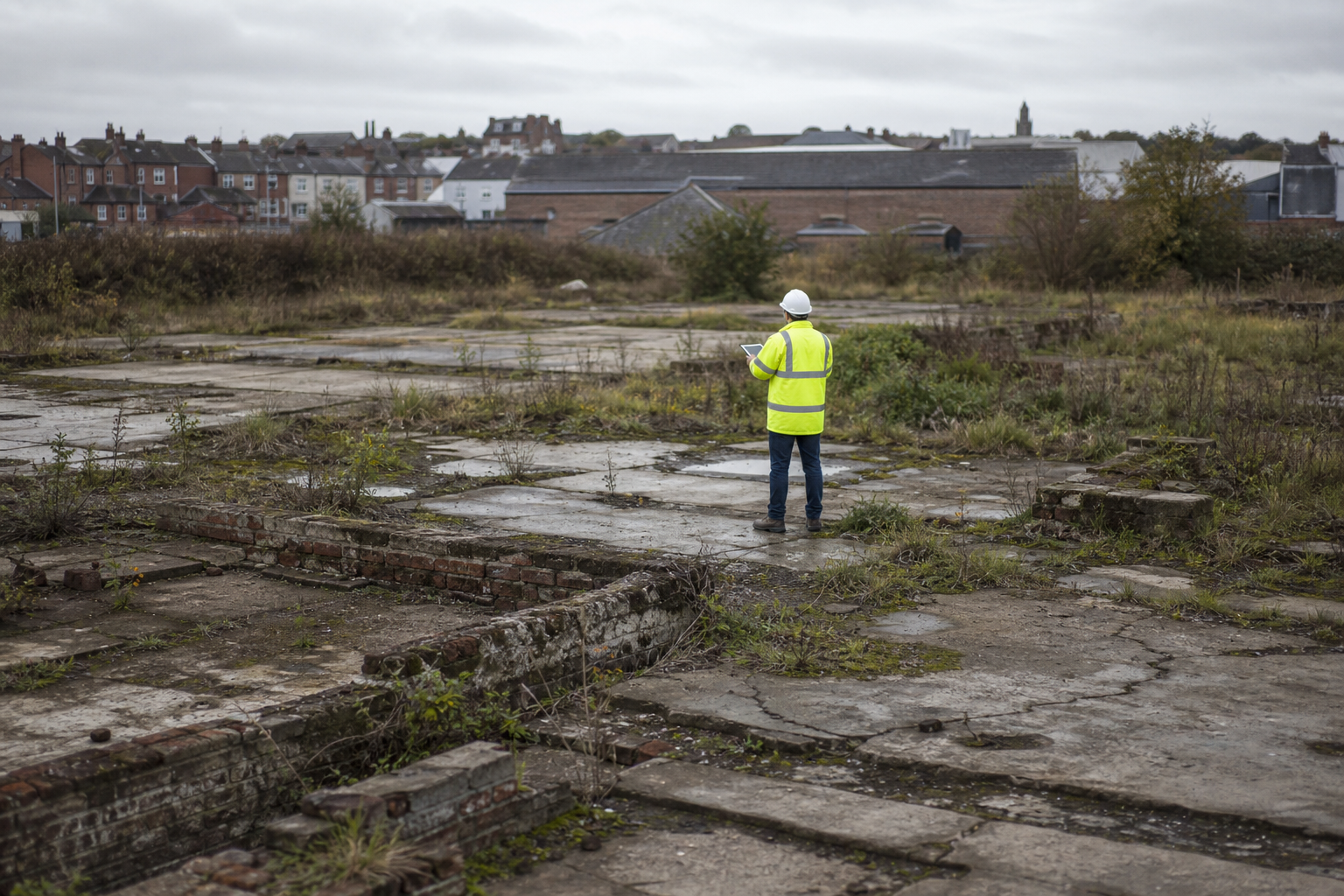
Finding a brownfield opportunity is only the first step. Before it goes anywhere near an offer, you need a realistic view of what's actually involved in bringing it forward.
Contamination: Start with a Desktop Study
Not every brownfield site is contaminated, but assume you'll need to check. A desktop study, pulling together historic land use, environmental records, and geological data, is the usual first move, and it's relatively quick and low-cost. If that flags a risk, intrusive investigation (boreholes, trial pits, soil and groundwater sampling) follows to confirm what you're actually dealing with. Whatever remediation turns out to be needed should go straight into your appraisal as a cost line, not an afterthought.
Viability: Weigh Remediation Against the Infrastructure Saving
Brownfield sites can carry abnormal costs that greenfield sites don't: demolition, decontamination, and sometimes structural work to existing foundations or services. Set against that is the infrastructure saving, existing utilities, access, and transport links that a greenfield scheme would need to build from scratch. Getting this trade-off right is central to appraisal, and it's worth taking your development appraisals further to stress-test the numbers properly.
Remember the Other Constraints
Previously developed status doesn't exempt a site from the usual planning constraints. Flood risk, heritage designations, and ecological considerations all still apply, and can affect a brownfield site just as readily as a greenfield one.
Why Brownfield Sites Matter for the Future of Development
Brownfield is more than a planning buzzword. It’s a central part of how the UK will deliver sustainable, connected, well-located homes in the coming decades.
Redeveloping brownfield land supports:
- Sustainable land use
- Urban regeneration
- Policy compliance
- Faster planning routes
- Better infrastructure utilisation
- Higher-quality placemaking
But to unlock these benefits, developers need accurate data, fast insights, and confidence that they’re working with viable land. That’s where LandInsight, and the wider LandTech ecosystem known as LandIntelligence, step in - helping you find opportunities earlier, assess them more efficiently, and make informed decisions backed by connected data.
FAQs About Brownfield Land
- What is a brownfield site?
A brownfield site is land that has been previously developed, typically hosting buildings or infrastructure in the past. In planning terms, this aligns with the NPPF definition of “previously developed land.”
- What is the difference between brownfield and greenfield land?
Brownfield is previously developed; greenfield is untouched. Brownfield often benefits from existing infrastructure and planning support, while greenfield may involve more constraints, especially within the green belt.
- Are brownfield sites always contaminated?
No. Some brownfield land is contaminated, but many sites are clean. A desktop survey and ground investigation usually clarify the position.
- What is the Brownfield Land Register?
It’s a statutory list maintained by each local authority, recording sites they consider suitable for housing-led redevelopment. Updated annually.
- Why does the government prioritise brownfield development?
Because it supports sustainable growth, protects undeveloped land (including green belt), and helps local authorities meet housing targets more quickly.
Next Steps: See It In Action
Discover how developers use LandInsight to identify and assess brownfield sites with confidence.
Related reading:
- Class E and Permitted Development: Updates and Implications for Developers
- Find Out Land Ownership: A UK Developer's Guide
- How to Get Planning Permission in the Green Belt
- Planning Permission: A Complete Guide for UK Developers
- How to Take Your Development Appraisals to the Next Level and Secure Funding