

Speculative development isn’t about building blindly. It’s a deliberate, land-led strategy where commitment is phased and risk reduces over time. It’s also known as development ‘absent a development plan allocation’.
It means that development is coming forward in locations that weren’t contemplated by the council when the development plan was adopted. Just because these locations weren’t contemplated, doesn’t mean that the locations aren’t good, and the housing isn’t needed!
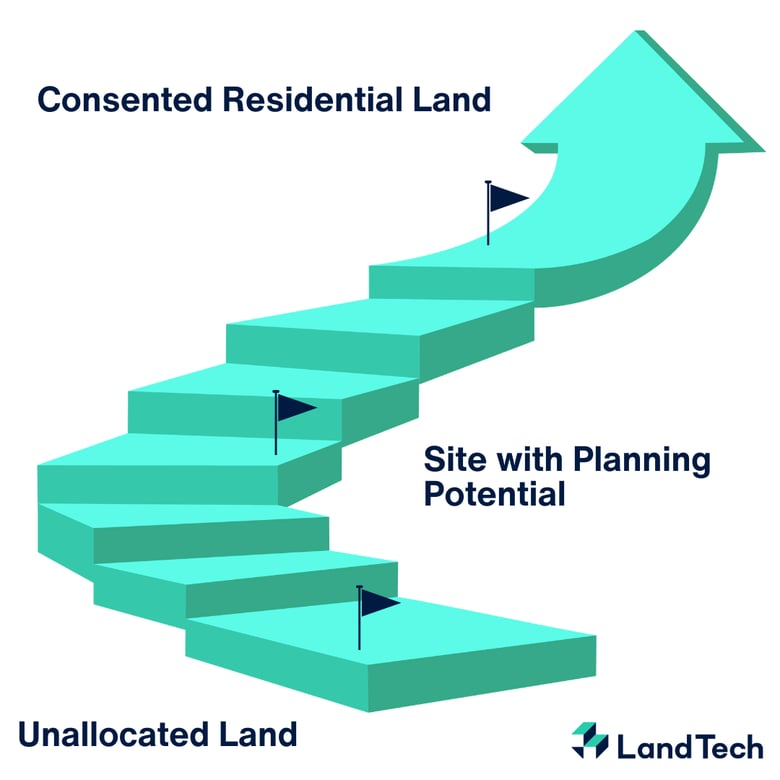
In the UK, it often starts with land acquisition. Developers secure sites without planning permission in place, then work methodically to remove uncertainty. As planning risk falls, land value rises. That uplift is the prize.
This approach differs from planning applications on allocated sites, where the developer knows that - in theory at least - the concept of development in the location in question has support. Instead, speculative development requires developers to take a risk on sites that may not have pre-existing support from decision makers. Sometimes, with greater risk, comes greater reward.
Here’s how it works in practice, and where the real risk (and opportunity) sits.
Key Highlights
- Strategic Risk Management: Speculative development is a deliberate, land-led strategy where risk is reduced step-by-step through phased investment and data-backed decision-making.
- Targeting Unallocated Sites: It involves developing land not originally contemplated in a council's local plan, often where housing land supply is constrained.
- Value Creation through Planning: Developers create significant value uplift by securing planning permission on land previously valued only for its current (non-residential) use.
- Data-Driven Analysis: Success relies on a rigorous review of planning history, appeal decisions, local policy, and site constraints like Green Belt or flood risks.
- Diverse Industry Players: The practice is a standard part of the UK development process used by SME developers, land promoters, volume housebuilders, and commercial investors.
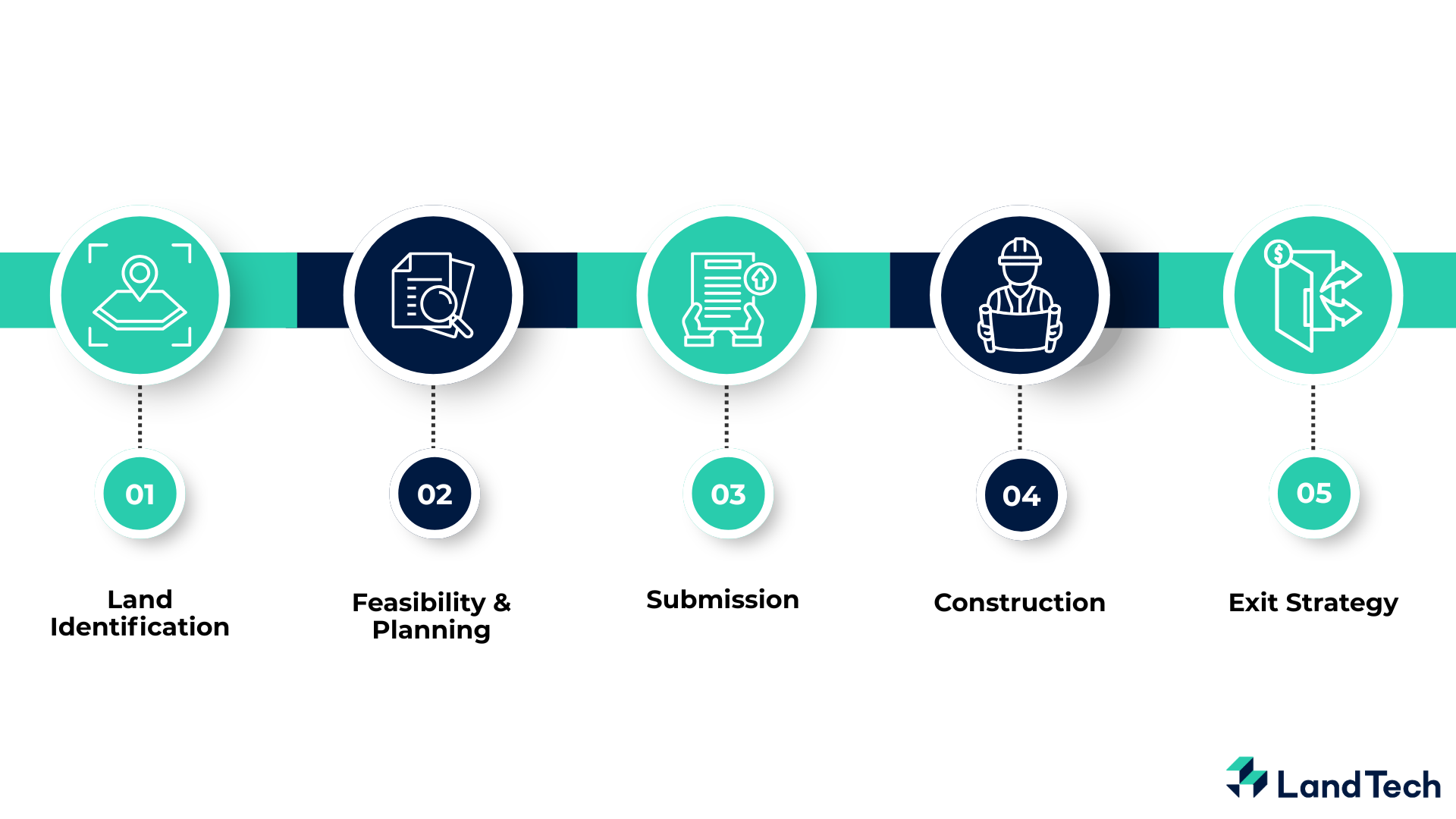
- Disciplined Five-Step Process: Projects typically follow a structured path from land identification and feasibility assessments to planning submission, construction, and final exit.
- Managed Exposure: While risks include planning refusals and market shifts, smart developers manage these by staging capital exposure and using platforms like LandInsight to gain early-stage clarity.
How Speculative Development Works in Practice
At its core, speculative development is about backing planning potential.
Developers acquire or control land without secured planning permission, buyers, or tenants, on the expectation that consent can be achieved and value created.
In UK planning terms, speculative schemes involve sites that aren’t allocated in the local plan. Unallocated sites carry more planning risk, and proposals may face closer scrutiny, particularly where housing land supply is constrained, Green Belt policy applies, or infrastructure capacity is limited.
There are no guarantees - that’s the point. Developers rely on analysis instead. They review:
- Planning history on and around the site
- Appeal decisions and inspector reasoning
- Local plan policies and emerging policy direction
- Housing land supply position
- Comparable approvals nearby
- Constraints such as Green Belt, heritage, flood risk, highways, and utilities
- Residual land value sensitivity
This is where data becomes critical. Platforms like LandInsight allow developers to review planning precedent, assess constraints, and understand ownership and policy context before committing to a site. That makes planning risk clearer, and land decisions more informed.
In the UK, speculative development is a standard part of the development process. Many housing schemes, commercial projects, and land promotions begin with sites that carry planning risk, and only become deliverable once consent is secured.
That might look bold from the outside. In reality, it’s usually careful, calculated, and backed by data.
Why Developers Pursue Speculative Development
Put simply, because it creates opportunity.
Land without planning permission is usually sold at the value attributed to its approved use, which is usually lower than it would be if it were accompanied by an approval for residential development. If a developer can navigate planning successfully, the uplift in value reflects that reduced risk and increased certainty.
Speculative development also helps build pipelines. It gives developers greater control over how and when they deliver homes, rather than relying solely on fully consented land coming to market.
Instead of competing for the same sites as everyone else, developers can create their own opportunities by identifying underused land and unlocking development potential, including in areas such as grey belt land. It’s about being proactive, not reactive.
Speculation involves risk. The difference is how it’s managed.
Speculative developers don’t just dive in without understanding constraints, policy signals, and precedent. That’s reckless speculation, and it rarely ends well.
Smart developers phase investment. They review local authority decisions, analyse nearby approvals, assess constraints such as Green Belt, heritage, access, and infrastructure, and test viability before committing further capital.
Risk is reduced step by step. Decisions are informed, not instinctive. There’s a big difference.
Who Typically Undertakes Speculative Development?
“Speculative” is often a financing and risk-allocation decision, not a sector identity. It’s carried out by several types of developer and investor:
SME Developers
Smaller developers often pursue speculative land to grow their pipeline and compete with larger firms, especially when they can find land efficiently before it reaches the wider market.
Land Promoters
Land promoters specialise in securing planning permission on land without consent, then selling at enhanced value. Planning risk is their core business.
Volume Housebuilders
Strategic land acquisition without immediate planning permission is a core part of many housebuilders’ long-term strategies. Patience is often part of the model.
SME Commercial Developers and Investors
In sectors such as industrial and logistics, speculative build can be driven by anticipated demand rather than signed tenants. Timing and market knowledge are everything.
Key Characteristics of Speculative Development
Most speculative projects share a few defining features:
- No guaranteed planning permission
- Value created by reducing planning and development uncertainty
- Staged investment, with greater commitment as risk is reduced
- Heavy reliance on planning precedent, site intelligence, and local policy analysis
- Higher potential returns than fully consented, lower-risk opportunities
How Does Speculative Development Work?
Most speculative projects follow a disciplined process.
1. Land identification and control
Developers identify sites with potential and acquire or secure control through purchase or option.
2. Feasibility and planning assessment
They assess planning constraints, policy alignment, precedent, infrastructure, and viability to understand the likelihood of consent.
3. Planning strategy and submission
Developers refine proposals, engage with the local authority, and submit planning applications where appropriate.
4. Construction and delivery
Once planning permission is secured, they may build and sell, lease, or forward fund the scheme.
5. Exit or hold strategy
Returns are generated through sales, leasing income, or sale of the consented site to another developer or investor.
What Are the Risks of Speculative Development?
Since speculation often begins at land, not construction, risk tends to centre on planning consent.
Planning risk
Planning risk is the uncertainty around whether consent can be secured, and on what terms. Applications get refused. Conditions chip away at viability. Policy interpretation shifts. Understanding how a local authority behaves in practice, not just what policy says on paper, is critical to managing that risk.
Market risk
Markets move. Sometimes quickly. Values, build costs, and demand can all change during the planning and delivery period. Timing matters. Even the best planning strategy can’t override a sudden shift in the market.
Financial exposure
Capital is committed before outcomes are certain. The key is staging that exposure, with clear decision points along the way.
How to Approach Speculative Development With More Confidence
Successful speculative development isn’t guesswork. It’s informed, land-led decision making before the market catches up.
Developers who understand planning risk, site constraints, and how to access ownership information early are better placed to move quickly on viable opportunities.
This is where LandInsight becomes central to the workflow.
By bringing together planning history, ownership data, constraints, and nearby decisions in one workflow, LandInsight helps you see the full picture early, before time and capital are committed.
With better early-stage insight, developers can reduce uncertainty, avoid unviable sites, and move forward with greater confidence.
Discover how LandInsight can help you assess speculative sites with clarity and confidence.

FAQs About Speculative Development
What is the meaning of speculative development?
Speculative development is the acquisition of land or progression of a scheme without secured planning permission or allocation. Developers proceed based on informed expectations that value will increase as planning, market, and delivery risks are reduced.
What is a speculative build?
A speculative build is a property constructed without a pre-secured buyer or tenant. Developers build based on anticipated demand and market analysis, aiming to sell or let the space once complete.
What does speculative build mean?
Speculative build means starting construction before an occupier is confirmed. It is common in residential and industrial development, where developers rely on market insight and local demand rather than pre-agreed sales or leases.
What is speculation in construction?
Speculation in construction involves committing capital before planning permission, pre-sales, or tenant agreements are fully secured. Developers manage planning and market risk in order to achieve higher returns once uncertainty is resolved.
What is an example of speculative development?
An example of speculative development is purchasing land without planning permission, securing residential consent, and then building or selling the consented site at a higher value. The uplift reflects reduced planning risk and increased certainty.